
Radiant Barrier for Your Garage in Utah – Is It Worth It?
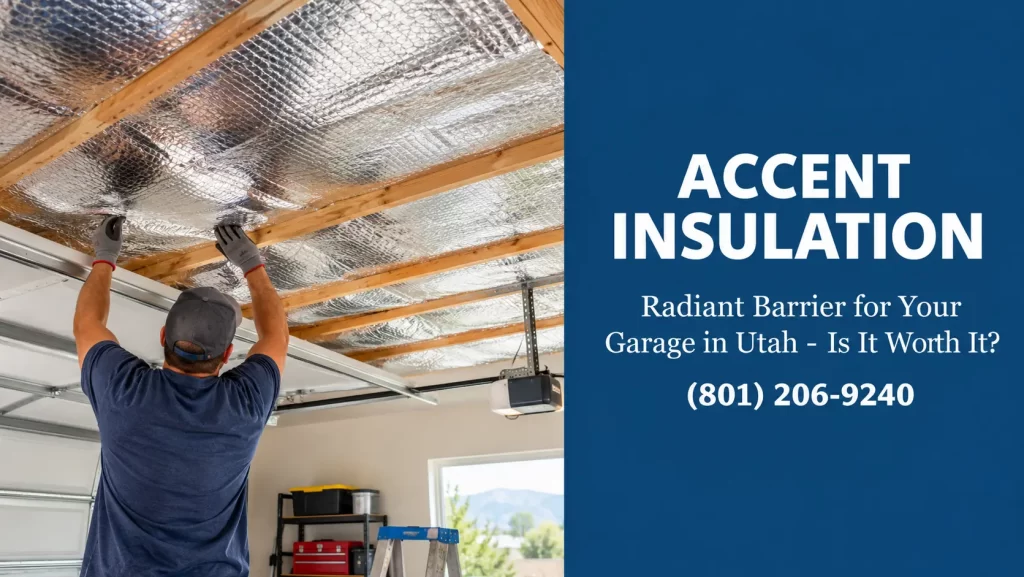
If you’ve ever opened your garage door in July and felt a wall of heat hit you, you already know the problem. Garage insulation Utah homeowners deal with has to handle wide temperature swings, and I want to walk you through whether a radiant barrier solves that.
What a Radiant Barrier Actually Does?
A radiant barrier isn’t the same as traditional insulation, and I think that distinction trips up a lot of homeowners. It reflects heat instead of slowing it down, which changes how and where it works best.
I install these reflective materials, usually a thin foil layer, on the underside of your roof deck or garage ceiling. When sunlight hits your roof, it heats the roofing material, and that heat radiates downward into your attic or garage space. A radiant barrier bounces a good portion of that heat back before it ever reaches your living or storage area. I’ve worked with plenty of homeowners looking for an insulation company in Utah who assumed they needed thicker batts or blown-in fiber when a radiant barrier addressed their actual problem.
Here’s where I see radiant barriers make the biggest impact:
- Detached garages with minimal or no existing insulation
- Attached garages under a hot roof with direct sun exposure
- Workshops or converted garage spaces where you spend real time
- Homes where standard insulation alone hasn’t solved the heat problem
Why Garage Heat Reduction Matters in Ogden and Beyond?
I get calls from homeowners across the Wasatch Front, and garage heat comes up constantly, especially once summer hits. A hot garage doesn’t just make it uncomfortable to grab something from storage. It pushes heat into shared walls, affects anything stored inside, and can even raise the temperature in adjacent rooms.
Garage heat reduction Ogden Utah homeowners ask about most often comes down to one issue: their garage roof absorbs sun all day and radiates that heat well into the evening. If your garage sits under direct sun for most of the afternoon, that heat has nowhere to go but down into your space.
I’ve seen this play out with:
- Garages used as home gyms or workshops that become unusable by midafternoon
- Attached garages that push heat into adjacent bedrooms or living rooms
- Vehicles and stored items exposed to extreme temperature swings
- HVAC systems working overtime because garage heat seeps into the main house
Addressing this isn’t complicated once you understand where the heat comes from and how to block it before it spreads.
How Radiant Barrier Garage Installation Works?
I want to walk you through what actually happens when I install a radiant barrier, since the process is more straightforward than most people expect.
Radiant barrier garage installation starts with an assessment of your garage’s structure, roofline, and existing insulation. I look at where the sun hits hardest and how much of that heat currently makes it into your space. From there, I install the reflective material along the roof deck or ceiling joists, making sure it faces an open air gap since radiant barriers need that gap to reflect heat effectively.
A few things I check before recommending this approach:
- Roof pitch and orientation relative to the sun
- Existing ventilation in the attic or garage space
- Whether your garage already has some insulation that needs supplementing
- Access points for installation without disrupting stored items
Once installed, a radiant barrier keeps working without maintenance, and it pairs well with other insulation upgrades if your garage needs more than reflection alone. If you’re weighing your options, our insulation services page covers how radiant barriers fit alongside traditional materials.
How to Cool Down a Garage in Utah Summer?
Summer in Utah doesn’t ease up, and a garage without any heat management becomes one of the hottest spots on your property by early afternoon.
When homeowners ask me how to cool down a garage in Utah summer, I usually point to a combination of strategies rather than one single fix. A radiant barrier handles the heat coming through the roof, but a few other steps round out the approach:
- Ventilation: A vented garage lets hot air escape rather than sitting trapped near the ceiling
- Weatherstripping: Sealing gaps around the garage door keeps conditioned air in and hot air out
- Insulated garage doors: These reduce heat transfer through what’s often the largest surface in the space
- Reflective roof coatings: These work alongside a radiant barrier to reduce the heat your roof absorbs in the first place
I always recommend checking the benefits of radiant barriers before deciding which combination fits your garage best, since not every home needs every upgrade.
Is a Radiant Barrier Worth It for Your Garage?
I get this question more than any other, and the honest answer depends on your garage’s exposure, current insulation, and how you use the space.
If your garage sits under direct sun for most of the day, or if you’ve noticed heat pushing into adjacent rooms, a radiant barrier gives you a real return on comfort. It works especially well in garage insulation Utah setups where the roof takes the brunt of summer sun and radiates that heat downward with nothing to stop it.
I’ve found radiant barriers make the most sense when:
- Your garage roof has direct sun exposure for several hours a day
- You use your garage as more than storage, like a workshop or gym
- Existing insulation hasn’t solved your heat problem on its own
- You want a low-maintenance upgrade that keeps working year after year
Radiant barriers work best in hot climates where reducing summer heat gain matters more than retaining winter warmth, which lines up well with Utah’s long, sun-heavy summers.
Common Questions About Garage Radiant Barriers
Does a radiant barrier work in winter too?
Radiant barriers focus on reflecting heat away, so they help most during hot months. In winter, standard insulation still plays the bigger role in keeping warmth inside.
Can I install a radiant barrier over existing insulation?
Yes. I often pair radiant barriers with existing batts or blown-in insulation for a more complete approach to garage temperature control.
Will this lower the temperature in my attached garage right away?
Most homeowners notice a difference within the first few hot days after installation, since the barrier immediately starts reflecting heat that would otherwise radiate down.
Do detached garages benefit as much as attached ones?
Detached garages often see a bigger relative improvement since they usually start with less insulation overall.
Final Thoughts
A hot, uncomfortable garage doesn’t have to stay that way. Once you understand how heat moves through your roof and into your space, garage insulation Utah solutions like a radiant barrier start to make a lot more sense. I’ve seen this upgrade turn unusable garages into spaces people actually want to spend time in, all while easing the load on the rest of the house.
If you’re dealing with a garage that turns into an oven every summer, contact us and I’ll walk you through whether a radiant barrier fits your home. At Accent Insulation, I’ve helped homeowners across Utah take control of garage heat, and I’d like to help you do the same.