
The Different Types of Attic Insulation – And Which One Makes Sense for a Utah Home
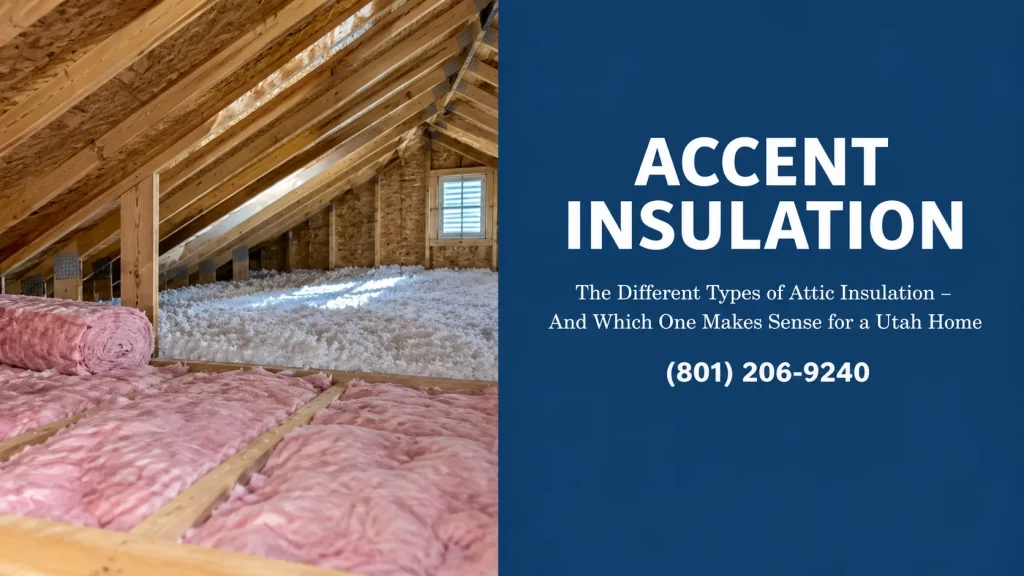
If you’re staring up into your attic wondering what’s actually up there, or whether it’s doing its job, you’re not alone. I walk homeowners through the types of attic insulation Utah homes typically use, and once you see the differences laid out, the choice gets a lot easier.
Why Attic Insulation Type Matters
Not every insulation material works the same way, and picking the wrong one for your attic can leave you with a space that never quite performs the way you expect. I like to start here because the differences matter more than most people assume.
Your attic takes on more heat gain and heat loss than almost any other part of your home, so the material you choose there carries real weight. Some options trap air to slow heat transfer. Others reflect heat before it even enters the space. Knowing which approach fits your attic’s structure and your climate goals makes the rest of this decision much simpler.
A few things I always factor in before recommending a material:
- Your attic’s current depth and condition of existing insulation
- Roof pitch and accessible space for installation
- Whether you’re dealing with new construction or a retrofit
- Your budget priorities around performance versus ease of install
Blown In Insulation for Utah Attics
Blown in insulation ranks among the most common choices I install, and for good reason. It fills odd spaces and gaps that other materials struggle to reach.
I use a machine to blow loose fill material, usually fiberglass or cellulose, directly into your attic space. It settles into corners, around joists, and into tight spots that rigid materials can’t cover well. Homeowners researching the types of attic insulation Utah contractors recommend often land on blown in first, since it works well for both new installs and topping off insulation that’s settled over time.
A few reasons blown in insulation stays popular:
- Covers irregular spaces and obstacles with less effort
- Installs faster than many other methods
- Works well as a top up over existing insulation
- Offers solid performance for the investment
If you’re weighing this option, working with a blown in insulation contractor who understands proper depth and coverage makes a real difference in how well the material performs over time.
Spray Foam as an Attic Insulation Option
Spray foam takes a different approach than loose fill material, and I find it fits certain attic situations better than others.
Spray foam expands on contact and hardens into a solid layer that seals gaps and cracks as it goes. Unlike blown in material, it creates an air barrier along with its insulating properties, which matters if your attic deals with drafts or air leakage around framing and penetrations. Blown in vs spray foam attic insulation comes down to priorities: blown in covers ground faster and costs less upfront, while spray foam seals air leaks that loose fill simply can’t address.
Here’s where I tend to recommend spray foam over blown in:
- Attics with significant air leakage around wiring or plumbing penetrations
- Homes dealing with ice dam issues tied to attic air movement
- Spaces where a smaller footprint delivers a higher R-value
- Situations where moisture control matters alongside thermal performance
Spray foam does ask for more upfront installation precision, so I always walk homeowners through whether their attic structure suits this approach before moving forward.
Attic Insulation Options Ogden UT Homeowners Consider
Ogden’s mix of cold winters and dry summers shapes which materials make the most sense locally, and I want to walk through what I see most often in this area.
Attic insulation options Ogden UT residents lean toward tend to favor materials that handle big temperature swings without losing performance over time. Blown in fiberglass holds up well here since it resists moisture better than some alternatives, which matters given how snow load and attic condensation can affect older homes through the winter months.
A few patterns I notice across Ogden area attics:
- Older homes often need a full insulation upgrade rather than a simple top up
- Attics with poor ventilation benefit from materials that resist moisture buildup
- Homes near higher elevation see bigger temperature swings and need higher R-value coverage
- Many homeowners combine blown in insulation with air sealing for the best results
Checking out this guide on blown in attic insulation gives you a closer look at how this material performs specifically in northern Utah conditions.
Radiant Barrier vs Spray Foam Attic Insulation
These two options get compared often, but they solve different problems, and understanding that distinction helps you avoid picking the wrong one for your goals.
Radiant barrier vs spray foam attic insulation isn’t really an apples to apples comparison once you look closely. A radiant barrier reflects heat away from your living space, working best against summer heat gain through the roof. Spray foam, on the other hand, creates a continuous insulating and air sealing layer that works year round against both heat gain and heat loss.
Here’s how I help homeowners think through the choice:
- Radiant barrier: Best for attics with strong summer sun exposure and existing insulation that just needs a boost against heat gain
- Spray foam: Best for attics needing both air sealing and a higher overall R-value in one application
- Combining both: Some homes benefit from a radiant barrier paired with blown in or batt insulation for layered performance
Neither option works as a total replacement for the other in every situation, so matching the material to your attic’s specific challenges makes the biggest difference.
How to Choose the Right Attic Insulation for Your Home
With several solid options on the table, picking the right one comes down to your attic’s specific conditions rather than a one size fits all answer.
I always start by assessing what’s already up there, how it’s performing, and what problems you’re trying to solve. The types of attic insulation Utah homeowners choose from each bring their own strengths, so matching material to your goals, whether that’s air sealing, moisture resistance, or simple cost effective coverage, gets you the best long term result.
A few questions worth asking before you decide:
- Is my current insulation underperforming, or is it missing entirely?
- Do I have air leakage issues that loose fill material won’t solve?
- How much sun exposure does my roof get during summer months?
- Am I planning other attic upgrades, like ventilation improvements, alongside this project?
Homeowners who’ve gone through this decision share their experience on my customer reviews page, which gives you a real sense of how these materials perform once installed.
Best Attic Insulation for Utah Homes: Final Considerations
Every attic tells a different story once I get up there and take a look, so the best material for your neighbor’s house might not be the best fit for yours.
When homeowners ask me about the best attic insulation for Utah homes, I always come back to the same starting point: assess before you assume. A home with good existing coverage might just need air sealing and a radiant barrier. A home with thin, settled insulation might need a full blown in upgrade or a switch to spray foam. There’s no universal answer, only the right answer for your specific attic.
Common Questions About Attic Insulation Types
Can I mix different insulation types in my attic?
Yes. Many homes benefit from combining materials, like a radiant barrier layered over blown in insulation, depending on what problems you’re trying to solve.
How do I know if my attic insulation needs replacing?
Signs include uneven room temperatures, higher than expected energy bills, and visible thinning or compression of existing material.
Does spray foam cost more than blown in insulation?
Spray foam generally asks for a bigger upfront investment, though it delivers air sealing benefits that blown in material doesn’t provide on its own.
Is radiant barrier enough on its own for attic insulation?
Not usually. Radiant barriers work best alongside traditional insulation rather than replacing it entirely.
Final Thoughts
Understanding the types of attic insulation Utah homes rely on puts you in a much stronger position to make the right call for your space. Whether you lean toward blown in material for its coverage, spray foam for its sealing power, or a radiant barrier to handle summer heat gain, the right choice comes down to your attic’s specific needs and your home’s goals.
If you’re ready to figure out what your attic actually needs, contact us and I’ll walk through your options with you. At Accent Insulation, I’ve helped homeowners across Utah find the right insulation fit for their attics, and I’d like to help you do the same.